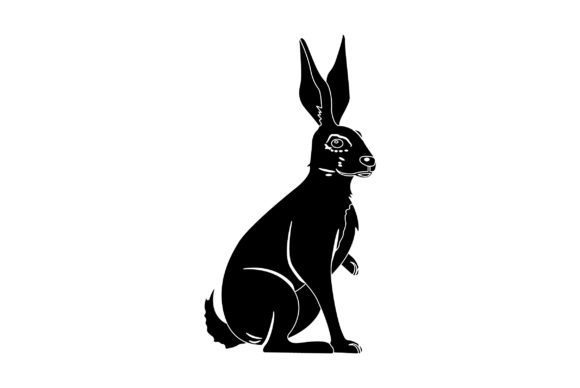
Rabbit Vector Design Solid Color
First Impression: Simple, Sweet, and Stitch-Ready
When I opened Rabbit Vector Design Solid Color, my eye landed on its clean silhouette—rounded ears, soft curves, and a gentle, centered posture. It’s not fussy or overly detailed, but it carries warmth and quiet charm. That matters more than you’d think in embroidery: too much complexity invites stitch distortion; too little feels forgettable. This one lands right in the sweet spot—friendly enough for baby onesies, refined enough for boutique aprons, and bold enough to read clearly at 3 inches wide on a tote bag.
A Real Project Test: Embroidering a Linen Kitchen Towel
Last week, I used Rabbit Vector Design Solid Color for a small-batch kitchen towel line—linen blend, medium weight, slightly textured surface. I digitized it myself (as I always do with vector graphics), keeping fill stitches open and satin edges smooth. The result? A design that held shape without puckering, read clearly from across the room, and felt *handmade*—not mass-produced. Customers noticed. One Etsy buyer wrote, “It looks like it was drawn just for my kitchen.” That’s the power of a well-balanced solid-color vector: it lets the stitching—and your craftsmanship—shine.
Where It Shines (and Where It Asks for Care)
Rabbit Vector Design Solid Color excels in projects where clarity and character matter more than fine detail. Think:
- Embroidered patches for kids’ backpacks or denim jackets
- Sweatshirt embroidery—especially on midweight cotton blends
- Personalized baby blankets and nursery pillows
- Tote bag designs meant to be seen, not scrutinized
- Holiday embroidery on tea towels or oven mitts
- Boutique branding for handmade soap or candle labels (as a stitched logo accent)
But it’s not magic. On thin or stretchy fabric—like lightweight jersey or baby rib knit—I’d add cutaway stabilizer and reduce stitch density in curved areas. On dark fabric, I’d test thread contrast first: a light ecru or oatmeal thread reads softer than stark white, and keeps the rabbit feeling warm, not clinical. And on curved surfaces—caps or fitted hats—I’d simplify inner ear lines before digitizing, since tight curves can distort in satin stitch.
What It Does for Your Craft Business
If you’re an Etsy seller, small shop owner, or craft fair vendor, Rabbit Vector Design Solid Color is quietly versatile. It doesn’t scream “trendy”—which means it won’t feel dated next season. It works as a standalone motif, a border element, or even a subtle repeat pattern when resized and spaced thoughtfully. For personalized gifts, it adds instant sweetness without overwhelming the recipient’s name or date. For commercial embroidery, it scales cleanly from 2” patches to 6” chest logos—no pixelation, no redraw needed.
Visually, it builds trust. Customers associate clean, intentional shapes with care and consistency—exactly what handmade product buyers look for. It also photographs beautifully in printable mockups, especially against natural backdrops (wood, stone, linen). That matters when you’re listing on Etsy or updating Instagram with new small shop products.
Design Notes Every Embroidery Professional Should Check
Before stitching Rabbit Vector Design Solid Color into your next finished product, take five minutes to ask:
- Test on scrap fabric first. Linen behaves differently than cotton twill—and both behave differently than fleece. See how the curves hold up.
- Review stitch density. Solid color doesn’t mean dense fill. Over-stitching flattens texture; under-stitching leaves gaps. Aim for 30–40% fill in open areas.
- Confirm hoop size compatibility. The vector is scalable—but your machine’s maximum hoop area isn’t. Resize early, not mid-digitizing.
- Inspect small details. The inner ear curve and cheek contour are subtle. If they vanish at 1.5”, simplify them manually before stitching.
- Try black-and-white mockups. Does the shape still read clearly without color? If yes, you’ve got strong design assets.
- Compare light vs. dark backgrounds. A single-thread outline may disappear on black fabric—add a tiny running stitch border if needed.
- Use proper stabilizer. Medium-weight tear-away works for stable fabrics; cutaway is safer for knits or textured weaves.
- Verify licensing. Since this is listed as a Graphics file for logos and illustrations, confirm whether commercial use—including selling embroidered finished products—is permitted. When in doubt, contact the creator.
Final Thought: A Reliable, Human-Centered Design Asset
Rabbit Vector Design Solid Color won’t replace your original sketches—but it will save time, elevate consistency, and quietly strengthen your brand voice. It’s the kind of Illustrations asset that disappears into your work while making everything around it feel more intentional. Whether you’re stitching a holiday gift for a friend or building a collection of small shop products for your Etsy store, it’s the steady, thoughtful helper you didn’t know you needed. Just remember: vectors give flexibility, but embroidery demands respect for fabric, thread, and real-world wear. Use it wisely—and stitch it with pride.