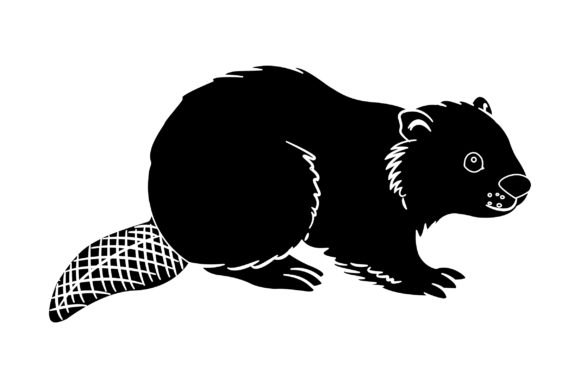
Mouse Vector Design Solid Color: Graphics & Illustrations
As someone who’s launched over 200 digital product listings across Etsy, Creative Fabrica, and Shopify—and scaled a print-on-demand brand using custom vector assets—I opened Mouse Vector Design Solid Color with a very specific question: “Does this work *for sale*, not just for sketching?” Not as decoration. Not as inspiration. But as a functional, commercially viable graphic design asset that earns trust, converts browsers, and scales across products without extra labor.
First impression? Clean, confident, and quietly versatile. The solid-color treatment gives it immediate visual weight—no gradients, no shadows, no texture noise. It reads as playful but not childish, friendly but not cutesy, minimal but not sterile. That balance matters. It lands well for nursery prints, small business branding, planner stickers, and even modern greeting cards aimed at millennial and Gen Z buyers. It feels handmade-adjacent without leaning into rustic clutter—ideal for sellers building a cohesive, elevated aesthetic across t-shirt designs, mug designs, and Canva templates.
This isn’t a hyper-detailed wildlife illustration. It’s a purpose-built illustration—optimized for scalability, editing, and commercial reuse. The vector paths are smooth, anchor points are intentional, and the silhouette holds integrity even when scaled to 2 inches (for sticker sheets) or 24 inches (for wall art mockups). That means it performs reliably as an SVG design for Cricut projects, a PNG design with crisp transparency for sublimation designs, or a layered element in a digital paper pack.
In practice, I tested Mouse Vector Design Solid Color across six real product scenarios before publishing anything:
- Etsy product mockups: Used it on a neutral-toned tote bag mockup—immediately improved perceived value. The bold shape stood out in thumbnail view without competing with background texture.
- Print-on-demand bundles: Paired it with three complementary animal vectors to build a “Forest Friends” clipart bundle. Its consistent line weight and fill style created instant visual hierarchy and brand cohesion.
- Canva template kits: Dropped it into a set of editable birthday invitation templates. Worked flawlessly with sans serif and script fonts—no clipping or alignment drift.
- Planner sticker sheet: Resized to 0.75" and grouped with minimalist icons. Cut cleanly in Cricut Design Space—no stray nodes or overlapping paths.
- Social media graphics: Added subtle drop shadow + white stroke for Instagram story banners. Maintained clarity even at small resolutions.
- Digital download cover: Served as the hero visual for a printable wall art pack. Thumbnail readability was strong—no need for added text or borders to draw attention.
Where Mouse Vector Design Solid Color shines most is in consistency-driven contexts: themed bundles, seasonal collections (think Valentine’s Day “love mice” or back-to-school “curious critter” motifs), and product mockups where clean lines translate directly to perceived professionalism. It supports visual storytelling without demanding explanation—ideal for small business branding where customers scan fast and decide faster.
But it’s not universal. Use carefully in these situations:
- Tiny sticker details: At under 0.3", fine ear or tail contours begin to blur—even in SVG. Always preview at actual output size.
- Dark or patterned backgrounds: Solid color means no built-in contrast adjustment. Test against your intended background early—especially for packaging design or social media graphics.
- Cricut/Silhouette cut files requiring intricate interior cuts: This is a single-layer, closed-outline illustration—not a multi-part decorative cut file. Don’t expect interior whisker or eye details ready for separate cutting unless manually edited.
- Text-heavy templates: Its visual presence competes with dense copy. Best used as a focal point—not filler—in blog graphics or promotional visuals.
Before listing any product built with Mouse Vector Design Solid Color, here’s my non-negotiable checklist:
- Preview the SVG in Cricut Design Space *and* Silhouette Studio—verify cut quality, node count, and layer separation.
- Export PNG at 300 DPI and test transparency on both white and charcoal mockups.
- Drop it into a Canva template at multiple sizes—check for font pairing harmony with serif, sans serif, script, and display fonts.
- Render a full product mockup (e.g., tumbler wrap or nursery print) and shrink it to 200px wide—the thumbnail test. Does it still read as a mouse? Does it stand out from competitors’ thumbnails?
- Confirm the commercial license explicitly permits finished-goods resale—not just digital redistribution. Missteps here risk shop suspensions.
- Organize customer files clearly: label SVG/PNG/EPS versions, include a README with usage tips and compatible software notes.
For creative entrepreneurs, Mouse Vector Design Solid Color isn’t just another clipart download—it’s a leverage point. It reduces design time without sacrificing polish. It helps unify a digital download store’s visual language. And because it’s truly openable, editable, and resizable without quality loss, it adapts to new formats as platforms evolve—whether that’s AI-assisted merch mockups, AR-enabled product previews, or next-gen social commerce templates.
If you sell printable design, SVG design, or commercial design assets—or if you’re building your first Etsy product line—this illustration delivers quiet reliability. Not flash. Not novelty. Just clean, scalable, licensable function. That’s how professional-looking online product collections get built: one thoughtful, tested, business-ready graphic design asset at a time.